
When designing a custom diaper bag for today’s moms, selecting the right diaper bag fabric is crucial. It not only determines the durability, safety, and functionality of the bag but also directly impacts the user experience. As a diaper bag manufacturer, we understand that high-quality bag fabric is the foundation of a perfect custom diaper bag. This article delves into the core materials commonly used in the luggage and diaper bag industry, with a focus on their application in diaper bag design and manufacturing, helping you choose the most suitable material for your custom diaper bag project.
Definitions and Differences:
- PVC Leather: A synthetic leather made from PVC resin, commonly known as artificial leather.
- PU Leather: A synthetic material made from polyurethane (PU) resin.
- PU Synthetic Leather: A composite of PU resin and non-woven fabric; more advanced in texture and performance.
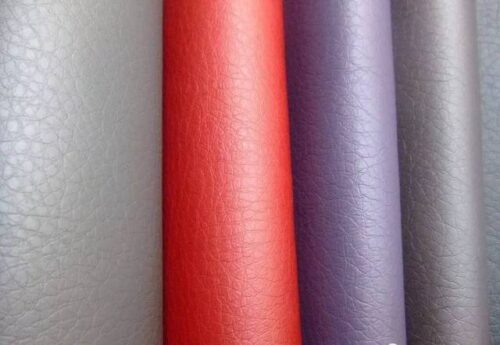
Identification Method – Gasoline Test:
Place a sample of the fabric into gasoline for 30 minutes. PVC leather will become hard and brittle, while PU synthetic leather will maintain its flexibility.
Application Tips for Diaper Bag Customization:
- Advantages: Synthetic leather fabrics are easy to clean and are typically used for high-contact areas like the bottom, side pockets, or decorative panels of a custom diaper bag. PU synthetic leather offers a more realistic leather look with a softer feel—ideal for handles, trims, or fashion-forward front panels, enhancing the bag’s luxury appeal.
- Disadvantages: Poor breathability—avoid using large areas on ventilated parts such as back panels or main compartment linings. Always check for eco-certifications to ensure the material is safe for baby-related products.
- Customization Suggestions: Opt for high-quality PU synthetic leather for embossing, foil stamping logos, or custom color matching to elevate your diaper bag fabric design.
Nylon/Oxford Fabrics – The Backbone of custom Diaper Bag
Renowned for versatility and performance, Oxford fabric is a top choice in diaper bag fabric customization. Variants include ripstop, full-dull, nylon (also known as nylon Oxford), jacquard, and twill—each suited for different structural and aesthetic purposes in custom diaper bag manufacturing.
1. Ripstop Oxford (Tao Ge)
- Material Overview: Woven from 150D polyester (FDY150D/36F) with a plain weave. Features density 360×210 threads per 10cm, treated for water resistance and anti-static properties. It undergoes relaxation, alkali treatment, dyeing, antistatic, and PU coating.
- Application: With its lightweight, soft feel, waterproof, and durability, this is ideal for lightweight custom diaper bags used for daily commuting or quick outings. Its waterproof coated surface resists leaks and light rain, making it a go-to material for custom diaper bag projects.

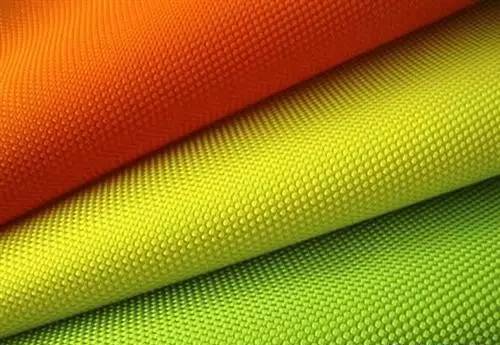
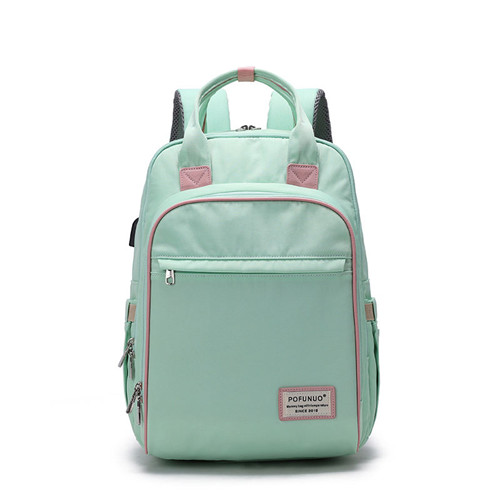
2. Nylon Oxford (Nylon Diaper Bag Fabric)
- Material Overview: Woven using 200D and 160D air-textured nylon yarns; known for smooth texture, drape, water resistance, and a glossy finish.
- Application: Combines the abrasion resistance of nylon with the textured structure of Oxford—great for outdoor diaper bags or high-friction areas such as the base and shoulder straps. Color customization is available to suit brand or personal preferences.
3. Full-Dull Oxford
- Material Overview: Crafted with 300D polyester DTY in a breathable textured structure and rubberized PU coating.
- Application: Ideal for stylish diaper bags. The subtle sheen and waterproof backing make it a strong choice for rainproof bags with structured shapes and fashion appeal.

4. Jacquard Oxford
- Material Overview: Made using 400D twisted polyester yarn in a unique textured weave; features 3D raised check textures and PU backing.
- Application: A popular choice for designer diaper bags. The texture alone provides built-in aesthetic value, reducing the need for extra embellishment. PU coating ensures excellent water resistance and shape retention.
5. Stripe Oxford (Weft-Striped)
- Material Overview: Woven with 68D/24F and 150D/36F polyester FDY with stripe patterns and a sturdy finish.
- Application: Ideal for tote-style diaper bags or outer decorative panels. Offers a modern aesthetic, excellent drape, and waterproof properties—meeting both design and functional requirements.
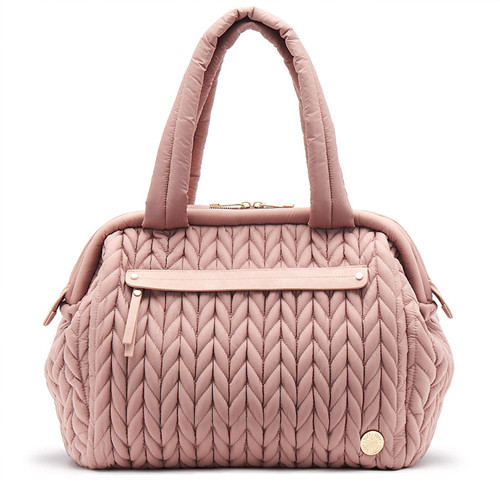
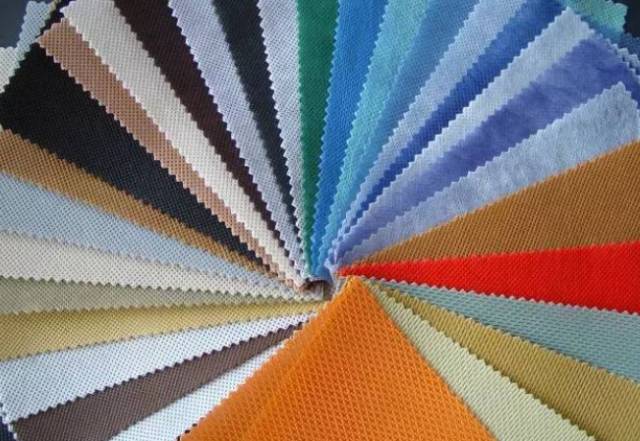
Non-Woven Fabrics – Essential for Linings and Eco-Conscious Design
Non-woven fabrics are widely used in diaper bag interiors, separators, and packaging accessories due to their low cost, environmental sustainability, and diversity in functionality. Depending on the production method, they serve various roles:
Common Types & Applications:
- Spunlace Non-Woven: Soft and skin-friendly. Often used for inner linings, wet wipe pouches, and changing pads.
- Thermal Bonded Non-Woven: Economical option for disposable inner compartments and packaging.
- Air-Laid Paper (Dust-Free Paper): Highly absorbent; ideal for liners and hygiene-related components.
- Wet-Laid Non-Woven: Uniform texture, suitable for high-end diaper bag linings.
- Spunbond Non-Woven: Strong and eco-friendly, commonly used for linings, compartments, and pouch sections. Frequently made from recycled materials like RPET—perfect for eco-friendly diaper bags.
- Meltblown Non-Woven: Exceptional filtration and barrier function. Used in antimicrobial compartments or sanitary accessories.
- Needle-Punched Non-Woven: Durable and customizable in thickness—suitable for structural layers or padded bottoms.
- Stitch-Bonded Non-Woven: Offers strength and structural integrity for linings or reinforcing elements in bags.
Key Benefits:
- Lightweight: Reduces overall bag weight.
- Eco-Friendly: Especially spunbond RPET options.
- Hygienic: Disposable or easy-to-replace linings maintain cleanliness.
- Multi-Functional: Provides moisture resistance, protection, and cushioning.
Material Insights:
- Denim: Made from indigo-dyed cotton warp and natural weft yarns; diagonal weave structure.
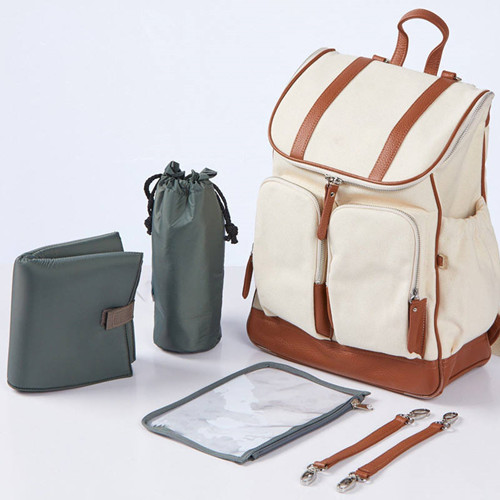
- Canvas: Thicker, tighter woven cotton plain weave. Known for strength and durability.
Applications in Custom Diaper Bags:
- Advantages:
- Natural cotton provides breathability and eco-friendliness.
- Medium/heavy-weight canvas excels in load-bearing performance and abrasion resistance—perfect for a durable diaper bag body or base.
- Denim’s trendy texture is favored by fashion-conscious moms.
- Drawbacks:
- Heavier weight, not inherently waterproof or stain-resistant.
- May shrink or fade after washing if untreated.
Customization Tips:
- Choose waterproof-treated canvas for added protection.
- Ideal for high-capacity, heavy-duty custom diaper bags.
- Canvas supports high-quality printing and embroidery—perfect for custom logos, names, or graphic designs.
- Ensure high dye fastness and advise on maintenance care for longevity.
Choosing the Right Fabric for Your Custom Diaper Bag Project
Understanding the properties, benefits, and applications of different diaper bag fabrics is the first step in crafting the perfect product.
Key Considerations:
- Core Functional Needs – Is water resistance, durability, lightweight structure, or load capacity your priority?
- Intended Use Scenarios – For daily commutes, short trips, outdoor use, or professional pumping moms?
- Safety & Sustainability – Are materials baby-safe and eco-certified? Do they align with sustainable production goals?
- Style & Aesthetic – Is the target design trendy, timeless, minimalist, or performance-driven?
- Customization Needs – Do you require special printing, embroidery, tactile textures, or high-performance coatings?

Partner with a Trusted Diaper Bag Manufacturer
As a professional diaper bag manufacturer, we help you navigate fabric choices based on your unique requirements. By combining our industry expertise with top-quality diaper bag materials, we can co-create a product that delivers outstanding functionality, safety, and visual appeal.
We welcome your inquiries and look forward to helping you build the next generation of custom diaper bags that meet the needs of today’s modern parents.
Let us know when you’re ready to start designing your ideal custom diaper bag!