
When purchasing a mommy bag, ensuring its quality is critical to meeting both functional and aesthetic expectations. As a buyer, your primary goal during mommy bags quality inspection is to verify that the product aligns with industry standards, guarantees durability, and fulfills the practical needs of parents. This guide provides a structured approach to inspecting mommy bags, addressing key aspects such as appearance, construction, materials, functionality, and accessories. By following this checklist, you can confidently assess the quality of a mommy bag and mitigate risks associated with substandard products.
I. Key Quality Aspects to Inspect During Mommy Bags Quality Inspection
A thorough quality inspection of a mommy bag involves evaluating multiple dimensions, each of which directly impacts its usability and longevity.
1.Appearance and Structural Integrity
- Exterior Design: The bag should maintain an upright, symmetrical shape with no visible distortions. Corners must be sharp and even, while seams should be straight and free from puckering or misalignment.
- Surface Finish: The fabric should exhibit consistent coloration, with no significant fading, stains, or discoloration. Inspect for defects such as broken threads, uneven stitching, or imperfections in the material.
- Interior Layout: The interior should be well-organized, with compartments and pockets designed for efficient storage of baby essentials (e.g., bottles, diapers, wipes). Ensure that seams are clean, and materials are free from tears or holes. The appearance is one of the most important thing need to be checked during the mommy bags quality inspection.
2. Material and Construction Standards for Mommy Bags Quality Inspection
- Fabric Quality:
When designing a mommy bag, the primary consideration should be the selection of easy-to-clean, durable, and wear-resistant fabrics. For instance, waterproof fabrics are an ideal choice for managing spills or moisture. During quality inspection, the main focus is to verify that the actual product matches the specified fabric, including parameters such as fabric density, thickness, base adhesive composition, and signs of poor weaving (e.g., loose threads or small imperfections). For rigorous quality control of mommy bags, specialized equipment such as a density microscope may be required to ensure precision.
Additionally, it is essential to confirm that the color of the bulk fabric matches the sample and to evaluate color fastness (i.e., resistance to fading or bleeding under various conditions). For orders with eco-friendly requirements, the manufacturer must provide relevant certification documents, such as environmental compliance certificates or sustainability reports, to validate adherence to environmental standards.
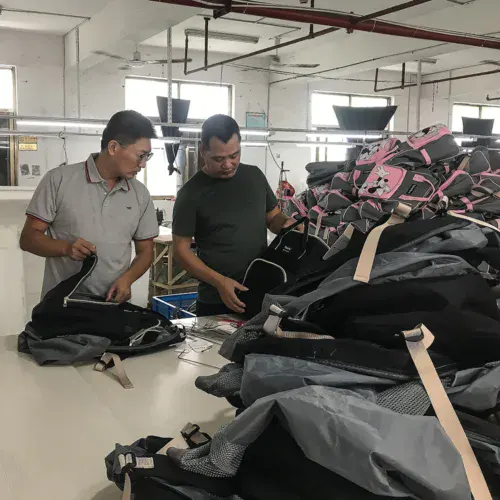
- Stitching and Reinforcement: Examine stitching for uniformity, ensuring that top and bottom threads are aligned. Critical areas (e.g., handles, zippers) should be reinforced to withstand heavy use. Look for skipped stitches, loose threads, or broken seams.
- Zippers and Hardware: Test zippers for smooth operation, ensuring they glide without snagging or misalignment. Metal components (e.g., buckles, clasps) should be corrosion-resistant, with a shiny finish and no visible rust or bubbles.
3.Functional and Design Considerations for Mommy Bags Quality Inspection
Compartment Quality: Since the inner compartments of a mommy bag are typically made by piecing together multiple layers of lightweight inner fabric, poor sewing techniques can lead to issues such as missing stitches, skipped stitches, or uneven stitching. To identify these problems, it is necessary to run your hand along the stitching line carefully. Particular attention should be paid to the area where the top of the pocket connects to the inner lining, as this part is prone to seam separation. It is essential to check whether there is any reinforcement treatment applied to prevent this issue.
Ergonomics: Evaluate the comfort of the handles, shoulder straps, and adjustable features, as well as the thickness and density of the sponge padding in the sandwich-style internal structure. Ensure that the weight distribution of the bag is balanced to prevent strain or injury caused by prolonged use.
Durability: Typically, the mommy bag is tested by loading it with 5–10 kg of weight and simulating real-life scenarios such as shaking, swaying, and shaking motions to mimic the impact of running or jumping. This test checks whether the shoulder straps and all stitching lines can withstand the corresponding impact force.
II. Common Defects to Watch For
During Mommy Bags Quality inspection, be vigilant for the following issues, which may indicate poor craftsmanship or subpar materials:
- Stitching Flaws: Inconsistent or uneven stitching, especially in high-stress areas like seams and corners.
- Zipper Malfunctions: Stiff zippers, missing teeth, or misaligned tracks that hinder usability.
- Material Weaknesses: Thin or frayed fabric, lack of water resistance, or poor-quality lining that may degrade over time.
- Hardware Issues: Loose or corroded metal components, such as handles or buckles, which can compromise safety and longevity.
III. Step-by-Step Inspection Checklist
To ensure a systematic evaluation, follow this checklist:
- Visual Inspection: Examine the exterior and interior for color consistency, fabric defects, and stitching quality.
- Functional Testing: Open and close zippers multiple times, test handle strength, and check compartment accessibility.
- Material Assessment: Rub the fabric with a damp cloth to verify water resistance and inspect for signs of wear.
- Structural Evaluation: Stand the bag upright to ensure stability and inspect corners for symmetry.
- Accessories Check: Confirm that all hardware (e.g., buckles, wheels) is securely attached and functions smoothly.
IV. Recommendations for Buyers
- Request Samples: Before bulk purchasing, obtain samples to conduct hands-on inspections.
- Verify Certifications: Look for certifications such as ISO standards or eco-friendly material certifications to ensure compliance with quality benchmarks.
- Engage Third-Party Inspectors: For large orders, consider hiring independent quality control agencies to conduct objective assessments.

Conclusion
A mommy bag’s quality directly influences its performance and user satisfaction. By adhering to the above guidelines, buyers can identify potential flaws, ensure compliance with industry standards, and make informed purchasing decisions. Remember, a rigorous inspection process not only safeguards your investment but also ensures that the product meets the demanding needs of modern parents. Regular quality checks and collaboration with reputable suppliers are essential to maintaining high standards in the competitive market.
If you have any question about mommy bag quality checking, or you have an order need to do quality inspection before ship out, feel free to contact me. you can aslo view our mommy bag blog for more information about diaper bag
